

A Broad View
Dolls vs Pixels
29.10.2026 18:00:00
The 20th Big Cartoon Festival (BCF), Russia’s largest international animation showcase, has opened in Moscow (Russian Federation) and will run until 2 November 2026. The festival features more than 300 works from 40 countries, Russian and international premieres, films by renowned masters and debut works by young directors, as well as special programmes marking the 90th anniversary of Soyuzmultfilm and the anniversary of director Eduard Nazarov.
On 28 October, International Animation Day, the festival’s business programme featured panel discussions at AKI Lab on animation exports, careers in the industry and project pitching. From 4 to 8 November, audiences will be able to attend workshops on animation production as part of the Cartoon Factory. From 6 to 15 November, the festival programme will also be available online, alongside virtual meetings with renowned animation directors and artists.
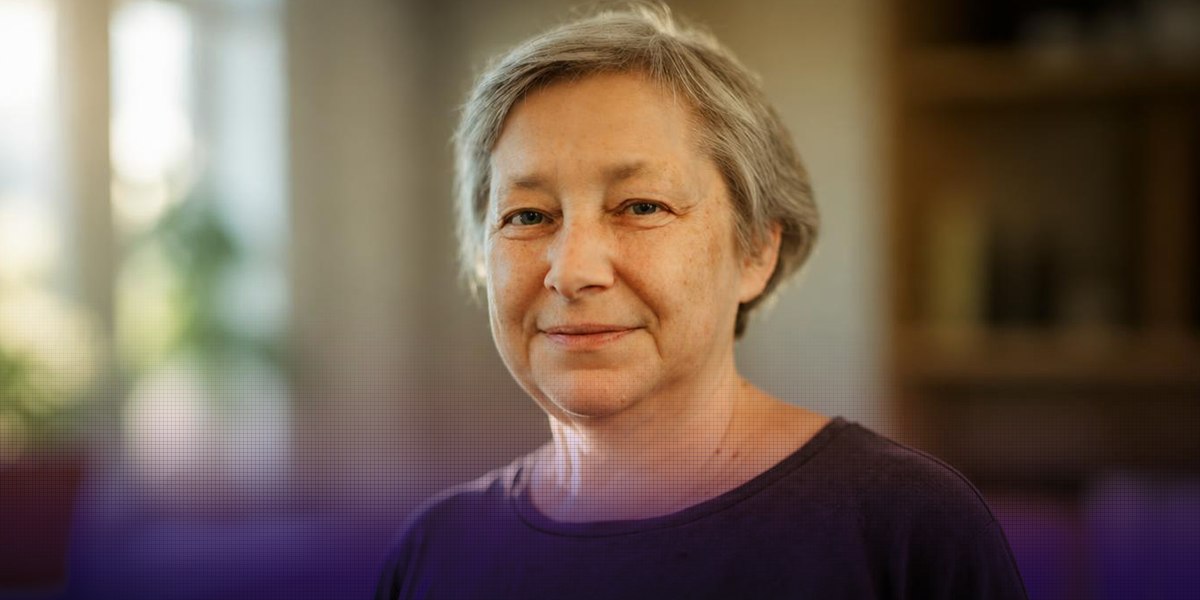
The first film screened for audiences was the Chinese feature Nobody, a story about four little demons who set off on a journey in search of a better life. Why does their story resonate with audiences in different countries? Why is there so much anxiety in contemporary animation? And what makes artists return to puppets in the age of artificial intelligence? Dina Goder, programme director of the Big Cartoon Festival and a theatre and animation critic, discussed these questions in an interview with Eurasia Today.
- This is the festival’s 20th edition. What has changed the most over the years? What are the distinctive features of this year’s programme?
- Over this time, not only the scale and structure of the programme have changed, but also what we want to present to our audiences. In the early years, the programme was larger because we wanted to fill gaps in our audience’s knowledge. Many people had seen very little archival animation, especially older foreign films, and knew little about contemporary animation simply because there was nowhere to watch it. We showed the very best films and put together a great many special programmes.
Today, the festival has not so much become smaller as more focused and better attuned to what audiences want. We no longer take the approach of saying, “We’ll tell you everything there is to know.” The festival has become more manageable for viewers. It is still impossible to see the entire programme, but you can certainly see a great deal of it. And choosing has become easier. If you have 30 options in a single day, you might simply decide to stay at home out of sheer overwhelm because you have no idea what to choose.
This year, we are placing a strong emphasis on lectures, workshops and meetings with directors, jury members, screenwriters, animators and illustrators. We believe that today it is important not just to watch films, but also to meet the people who make them and talk about the profession.
- The festival opened with the Chinese film Nobody. Why was this particular film chosen?
- Nobody is, first and foremost, a film we like. For the opening, we choose films that strike us as particularly vivid and interesting and are also suitable for this kind of screening. This is not a dark, challenging film - although we do have those, too - but a more entertaining one, intended for a broad audience. It may not be a children’s film, but it is suitable for both professionals and general viewers.
Many industry professionals attend the opening, but the venue is enormous, and plenty of people buy tickets simply because they want to watch a film. This time, most of the audience consisted of film enthusiasts who were particularly keen to see it. Tickets for the second screening sold out immediately.
- What does this film help us understand about China that we might normally overlook amid the news about its economy and politics?
- I would not say that the film helps us understand something about China that we would otherwise overlook. Of course, it explains certain things and tells us about mythology. It is also an interpretation of a fairly well-known book and legend. But the main point is what unites us all - what is exactly the same in China as it is here.
It is a story about courage, honesty and the desire of an ordinary, seemingly insignificant individual to help others. Its protagonists are not heroes in the conventional sense. They are simply animals who, as in everyday life, are subordinate to powerful, important bosses - in this case, powerful, important demons. And here we have little demons. Yet, as we see, they prevail because they work together.
- Which countries can surprise audiences today? Which films would you cite as examples?
- Essentially, any good film can surprise you and leave you moved. But it is especially exciting and inspiring when remarkable films emerge from countries that have not traditionally been associated with animation. Suddenly, something unexpected appears - something funny or, conversely, complex.
French cinema, of course, offers plenty of surprises, but we know that France has a very strong animation industry. The French produce a great many films and support everyone else. So the appearance of an interesting French film does not surprise us at all.
Take the Brazilian feature film "Son of a Bitch", for example. It was made by a team of directors, each working in their own corner of this vast country. They spent ten years making it. They probably had very little money, but they were determined to bring the film to life. It is a road movie about a young man who sets out to find his father. It is an adult film made with tremendous humour, full of fascinating and unusual elements. I think it is one of those films that really can surprise you.
There are also short films from countries we would not normally associate with animation. For instance, we have a very appealing film from Lebanon, which is a rarity. There is also a hilarious comic-book-style film from Kazakhstan. As for the large number of Chinese films in our programme, that no longer surprises us: China has an excellent animation industry.
- Do you notice common themes among filmmakers from different countries? What do they most often want to talk about today?
- Of course, everyone is concerned with human problems. Many films explore relationships between men and women. Young filmmakers often turn to the subject of family and parents.
There is a curious detail: over the past few years, the number of films designed to frighten audiences has increased. These include thrillers, horror films, dark dystopias, frightening fairy tales and elements of mysticism. I first noticed this trend at international festivals, but this year I discovered that there are quite a lot of such works in Russia as well.
We have brought Russian and international films together in a section called The Scary, which consists of two programmes. It includes science fiction and many other genres - everything is connected with the scary in one way or another. Audiences generally enjoy these films. Perhaps people find life frightening at the moment and are trying to express that through art.
I also think that quite a lot of films draw on real life. This trend has been around for a long time. A film might be documentary animation, which I talk about a great deal, or a work of fiction inspired by reality. People want to tell stories, including stories about their own families.
Our international competition has a separate documentary animation programme. Many of the films are about relatives, particularly grandmothers: the things they used to tell people and the stories associated with them. Some are incredibly vivid and fascinating. There is a great deal to say about this - there is no shortage of common themes.
- How do adult audiences discover animation? What helps them overcome the assumption that animated films are primarily intended for children?
- Some people are interested in different art forms from the outset, including animation. They seek out auteur films and watch them online. But many of our festivalgoers discovered animation at the festival when they were children.
The festival is 20 years old, and some of our adult audiences have grown up alongside it. They first attended children’s screenings, then programmes for teenagers, and eventually screenings for adults. Gradually, they came to understand that animation can be for adults as well as children, just like books or any other kind of cinema.
I think most adults discover animation when they go to the cinema with their children. You watch an animated film intended for children and suddenly realise that its themes interest you, too. A year, two or three years later, you come back with your child for a programme aimed at teenagers and discover something new again. Before you know it, you are hooked, and eventually you start attending the adult programmes. I think that is perfectly natural.
- What happens to films after the festival?
- Short animated films, like other short films, usually become available online after completing their festival circuit. Not necessarily after our festival, but after they have gone through the entire festival circuit, which can take two or three years.
Films are published individually or as part of special programmes and collections. For example, a studio might release a selection of its works grouped by theme or by director. There are various ways this happens, but, of course, most films eventually appear online.
If you are interested in a particular film, it is worth remembering its title and the creator’s name and checking from time to time to see whether it has become available online. Two or three years after a film is made, it can usually be found on the internet. This happens less often with feature-length films, but they can generally be found, too.
- What do you expect from animation in the coming years?
- It is difficult to say. To be honest, that is precisely what makes it exciting: I have absolutely no idea what to expect. As with any art form, I look forward to something new, interesting and unusual.
I imagine that in the near future we will see a great deal of work connected with technological breakthroughs, from the use of artificial intelligence to interactive formats in which people can take part in animated films themselves. There is no telling what the future holds.
However, I think something else is happening at the same time: the more films are made using new technologies, the more people try to create animation by hand. They turn to traditional puppets, handmade collage techniques, cut-out animation, sand animation and so on. Both artists and audiences really miss these techniques.
That is why, in my view, there is renewed interest in puppet animation. One might think that puppet films are no longer needed because any puppet can be rendered much more convincingly through drawing. And yet puppet animation is making a comeback. Many more puppet films are being made, including feature-length productions. There are also far more of them among short films than there were, say, 15 years ago.
Interview by Alyona Kazakova
Photo courtesy of the interviewee
On 28 October, International Animation Day, the festival’s business programme featured panel discussions at AKI Lab on animation exports, careers in the industry and project pitching. From 4 to 8 November, audiences will be able to attend workshops on animation production as part of the Cartoon Factory. From 6 to 15 November, the festival programme will also be available online, alongside virtual meetings with renowned animation directors and artists.
The first film screened for audiences was the Chinese feature Nobody, a story about four little demons who set off on a journey in search of a better life. Why does their story resonate with audiences in different countries? Why is there so much anxiety in contemporary animation? And what makes artists return to puppets in the age of artificial intelligence? Dina Goder, programme director of the Big Cartoon Festival and a theatre and animation critic, discussed these questions in an interview with Eurasia Today.
- This is the festival’s 20th edition. What has changed the most over the years? What are the distinctive features of this year’s programme?
- Over this time, not only the scale and structure of the programme have changed, but also what we want to present to our audiences. In the early years, the programme was larger because we wanted to fill gaps in our audience’s knowledge. Many people had seen very little archival animation, especially older foreign films, and knew little about contemporary animation simply because there was nowhere to watch it. We showed the very best films and put together a great many special programmes.
Today, the festival has not so much become smaller as more focused and better attuned to what audiences want. We no longer take the approach of saying, “We’ll tell you everything there is to know.” The festival has become more manageable for viewers. It is still impossible to see the entire programme, but you can certainly see a great deal of it. And choosing has become easier. If you have 30 options in a single day, you might simply decide to stay at home out of sheer overwhelm because you have no idea what to choose.
This year, we are placing a strong emphasis on lectures, workshops and meetings with directors, jury members, screenwriters, animators and illustrators. We believe that today it is important not just to watch films, but also to meet the people who make them and talk about the profession.
- The festival opened with the Chinese film Nobody. Why was this particular film chosen?
- Nobody is, first and foremost, a film we like. For the opening, we choose films that strike us as particularly vivid and interesting and are also suitable for this kind of screening. This is not a dark, challenging film - although we do have those, too - but a more entertaining one, intended for a broad audience. It may not be a children’s film, but it is suitable for both professionals and general viewers.
Many industry professionals attend the opening, but the venue is enormous, and plenty of people buy tickets simply because they want to watch a film. This time, most of the audience consisted of film enthusiasts who were particularly keen to see it. Tickets for the second screening sold out immediately.
- What does this film help us understand about China that we might normally overlook amid the news about its economy and politics?
- I would not say that the film helps us understand something about China that we would otherwise overlook. Of course, it explains certain things and tells us about mythology. It is also an interpretation of a fairly well-known book and legend. But the main point is what unites us all - what is exactly the same in China as it is here.
It is a story about courage, honesty and the desire of an ordinary, seemingly insignificant individual to help others. Its protagonists are not heroes in the conventional sense. They are simply animals who, as in everyday life, are subordinate to powerful, important bosses - in this case, powerful, important demons. And here we have little demons. Yet, as we see, they prevail because they work together.
- Which countries can surprise audiences today? Which films would you cite as examples?
- Essentially, any good film can surprise you and leave you moved. But it is especially exciting and inspiring when remarkable films emerge from countries that have not traditionally been associated with animation. Suddenly, something unexpected appears - something funny or, conversely, complex.
French cinema, of course, offers plenty of surprises, but we know that France has a very strong animation industry. The French produce a great many films and support everyone else. So the appearance of an interesting French film does not surprise us at all.
Take the Brazilian feature film "Son of a Bitch", for example. It was made by a team of directors, each working in their own corner of this vast country. They spent ten years making it. They probably had very little money, but they were determined to bring the film to life. It is a road movie about a young man who sets out to find his father. It is an adult film made with tremendous humour, full of fascinating and unusual elements. I think it is one of those films that really can surprise you.
There are also short films from countries we would not normally associate with animation. For instance, we have a very appealing film from Lebanon, which is a rarity. There is also a hilarious comic-book-style film from Kazakhstan. As for the large number of Chinese films in our programme, that no longer surprises us: China has an excellent animation industry.
- Do you notice common themes among filmmakers from different countries? What do they most often want to talk about today?
- Of course, everyone is concerned with human problems. Many films explore relationships between men and women. Young filmmakers often turn to the subject of family and parents.
There is a curious detail: over the past few years, the number of films designed to frighten audiences has increased. These include thrillers, horror films, dark dystopias, frightening fairy tales and elements of mysticism. I first noticed this trend at international festivals, but this year I discovered that there are quite a lot of such works in Russia as well.
We have brought Russian and international films together in a section called The Scary, which consists of two programmes. It includes science fiction and many other genres - everything is connected with the scary in one way or another. Audiences generally enjoy these films. Perhaps people find life frightening at the moment and are trying to express that through art.
I also think that quite a lot of films draw on real life. This trend has been around for a long time. A film might be documentary animation, which I talk about a great deal, or a work of fiction inspired by reality. People want to tell stories, including stories about their own families.
Our international competition has a separate documentary animation programme. Many of the films are about relatives, particularly grandmothers: the things they used to tell people and the stories associated with them. Some are incredibly vivid and fascinating. There is a great deal to say about this - there is no shortage of common themes.
- How do adult audiences discover animation? What helps them overcome the assumption that animated films are primarily intended for children?
- Some people are interested in different art forms from the outset, including animation. They seek out auteur films and watch them online. But many of our festivalgoers discovered animation at the festival when they were children.
The festival is 20 years old, and some of our adult audiences have grown up alongside it. They first attended children’s screenings, then programmes for teenagers, and eventually screenings for adults. Gradually, they came to understand that animation can be for adults as well as children, just like books or any other kind of cinema.
I think most adults discover animation when they go to the cinema with their children. You watch an animated film intended for children and suddenly realise that its themes interest you, too. A year, two or three years later, you come back with your child for a programme aimed at teenagers and discover something new again. Before you know it, you are hooked, and eventually you start attending the adult programmes. I think that is perfectly natural.
- What happens to films after the festival?
- Short animated films, like other short films, usually become available online after completing their festival circuit. Not necessarily after our festival, but after they have gone through the entire festival circuit, which can take two or three years.
Films are published individually or as part of special programmes and collections. For example, a studio might release a selection of its works grouped by theme or by director. There are various ways this happens, but, of course, most films eventually appear online.
If you are interested in a particular film, it is worth remembering its title and the creator’s name and checking from time to time to see whether it has become available online. Two or three years after a film is made, it can usually be found on the internet. This happens less often with feature-length films, but they can generally be found, too.
- What do you expect from animation in the coming years?
- It is difficult to say. To be honest, that is precisely what makes it exciting: I have absolutely no idea what to expect. As with any art form, I look forward to something new, interesting and unusual.
I imagine that in the near future we will see a great deal of work connected with technological breakthroughs, from the use of artificial intelligence to interactive formats in which people can take part in animated films themselves. There is no telling what the future holds.
However, I think something else is happening at the same time: the more films are made using new technologies, the more people try to create animation by hand. They turn to traditional puppets, handmade collage techniques, cut-out animation, sand animation and so on. Both artists and audiences really miss these techniques.
That is why, in my view, there is renewed interest in puppet animation. One might think that puppet films are no longer needed because any puppet can be rendered much more convincingly through drawing. And yet puppet animation is making a comeback. Many more puppet films are being made, including feature-length productions. There are also far more of them among short films than there were, say, 15 years ago.
Interview by Alyona Kazakova
Photo courtesy of the interviewee

Other Interviews
Orange Diplomacy
Sahar Zaman (India): “Art helps resist misinformation”
09.11.2026 11:54:19
Anatomy of Authority
Aziz Pirimkulov: "Reputation, rating, advertising"
27.10.2026 16:34:19
Royal Acharya (Nepal): “To show the real Nepal, it is important to go beyond the image of the country focused on tourism and mountaineering.”
19.05.2026 16:38:00